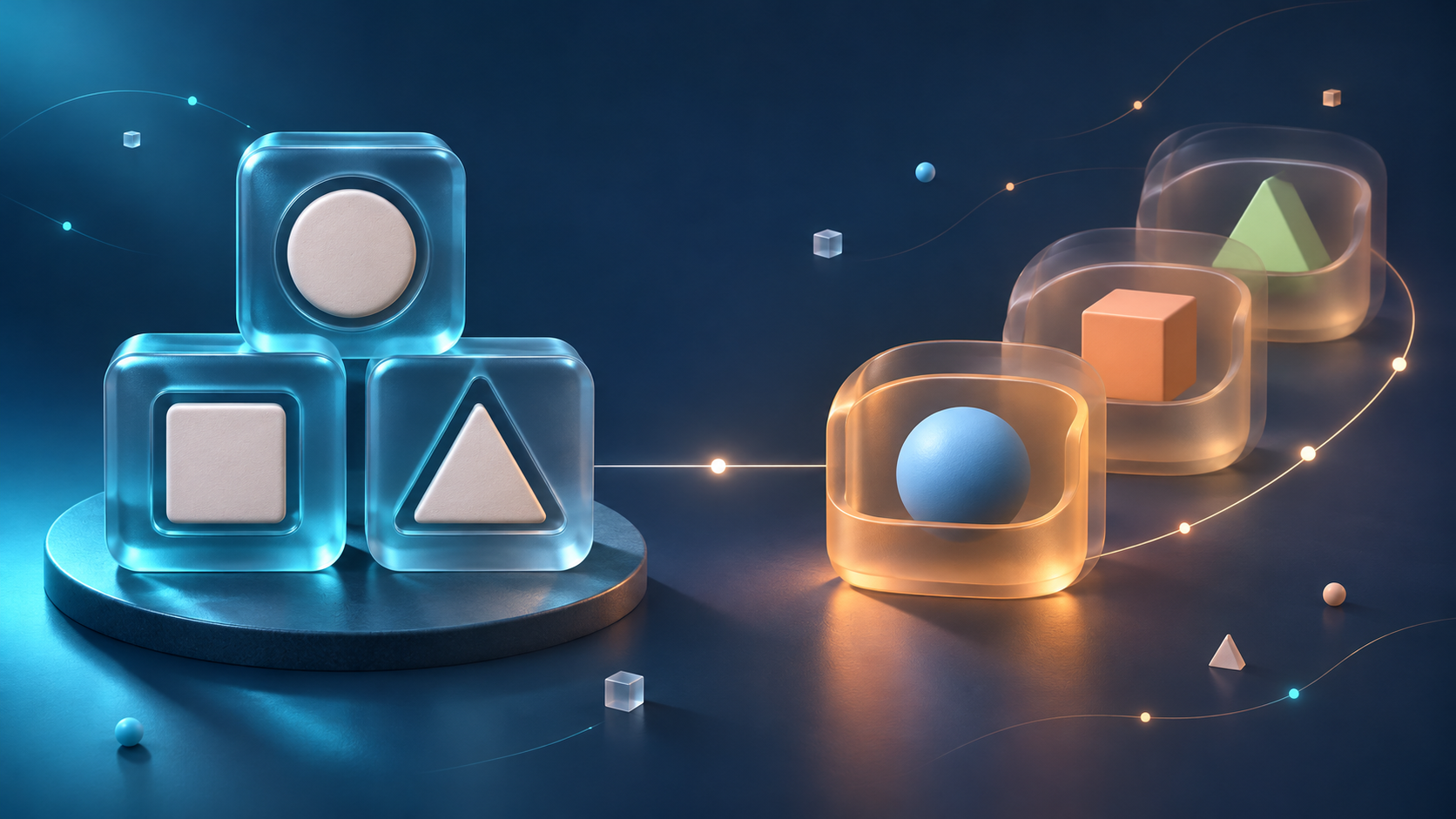
Event-Driven Architecture (EDA) represents a foundational architectural paradigm that decouples distributed services through the asynchronous production, detection, and consumption of events. Rather than relying on synchronous request-response HTTP RPC chains that couple services temporally and operationally, event-driven architectures leverage append-only immutable event logs to achieve massive horizontal scalability, temporal decoupling, and complete auditability. Combining Event Sourcing with Command Query Responsibility Segregation (CQRS) and Apache Kafka establishes the backbone for modern hyperscale software platforms.
1. Limitations of Synchronous Request-Response Microservices
Early microservice adoptions predominantly utilized synchronous HTTP/REST or gRPC calls between services. While conceptually straightforward, synchronous topologies introduce severe systemic liabilities as systems scale:
- Temporal Coupling: If Service A calls Service B, which calls Service C, all three services must be simultaneously healthy, online, and responsive. The availability of the chain is the mathematical product of the individual service availabilities:
A_total = A_1 * A_2 * A_3. A single slow downstream service degrades the entire chain. - Cascading Latency Accumulation: Every synchronous network hop introduces TCP handshakes, serialization delays, and queue contention, inflating P99 tail latency.
- Blast Radius Propagation: A traffic spike hitting Service A propagates synchronously down the call graph, overwhelming downstream databases and triggering cascading service outages.
Event-Driven Architecture inverts this dependency: Service A emits an immutable event (e.g. OrderPlaced) to an event broker and immediately returns success to the client. Downstream consumers consume the event at their own pace, completely isolating failures.
2. Event Sourcing: State as an Append-Only Stream of Historical Facts
In classical database architectures, if a bank customer deposits $50 and later withdraws $20, the database row is overwritten: balance = 30. The historical transactions are lost unless recorded in separate, non-authoritative audit tables.
Event Sourcing replaces mutable database tables with an append-only Event Store:
- Every state mutation is captured as an immutable event object:
AccountOpened,MoneyDeposited($50),MoneyWithdrawn($20). - Events are never updated and never deleted; they represent historical truth.
- The current state of an entity (the Aggregate) is derived by replaying its stream of events from the beginning of time:
State = Fold(Events, InitialState).
The Snapshot Optimization
If an entity accumulates thousands of events over years of activity, replaying all events on every read request would cause severe CPU and I/O latency. Event stores resolve this using Snapshots:
Every 100 events, serialize current state to snapshot: AccountSnapshot(version=1000, balance=$4,250)
To rebuild state: Load Snapshot(v=1000) + Replay events (v=1001 to v=1024)
3. CQRS: Segregating Command and Query Responsibility
While Event Sourcing provides flawless auditability and write throughput, querying an event store is inefficient. Answering a simple question like ‘List all customers with balance > $10,000 in California’ would require replaying the event streams of every customer in the database!
To resolve this, Greg Young formalized Command Query Responsibility Segregation (CQRS):
| Architectural Dimension | Command Side (Write Model) | Query Side (Read Model) |
|---|---|---|
| Primary Responsibility | Validates business invariants; emits and appends events. | Serves read queries, dashboards, and reporting APIs. |
| Data Storage Engine | Append-only Event Store (EventStoreDB, DynamoDB, PostgreSQL). | Read-optimized projection stores (Elasticsearch, PostgreSQL, Redis). |
| Data Modeling Paradigm | Domain-Driven Design (DDD) Aggregates and Event Streams. | Denormalized relational views or flat document schemas. |
| Consistency Model | Strong transactional consistency on aggregate write. | Eventual Consistency (asynchronously updated via event consumers). |
| Scaling Characteristics | Optimized for high-velocity append writes and concurrency checks. | Optimized for horizontal read scaling and complex multi-column filters. |
4. Apache Kafka Architecture: Topics, Partitions, and Consumer Groups
Apache Kafka is the preeminent distributed event streaming platform, engineered by LinkedIn to process trillions of events per day.
A. The Log Paradigm and Partitions
In Kafka, an event topic is divided into one or more Partitions. Each partition is an ordered, immutable sequence of records stored on disk as sequential log segments.
- Sequential Disk I/O: Kafka appends messages sequentially to disk and utilizes the OS kernel Zero-Copy (sendfile) optimization to transfer bytes directly from the page cache to network sockets, bypassing application memory buffers.
- Strict Ordering per Partition: Messages within a single partition are guaranteed to be read in the exact order they were written. Kafka does not guarantee global ordering across multiple partitions.
B. Partitioning Strategies (The Message Key)
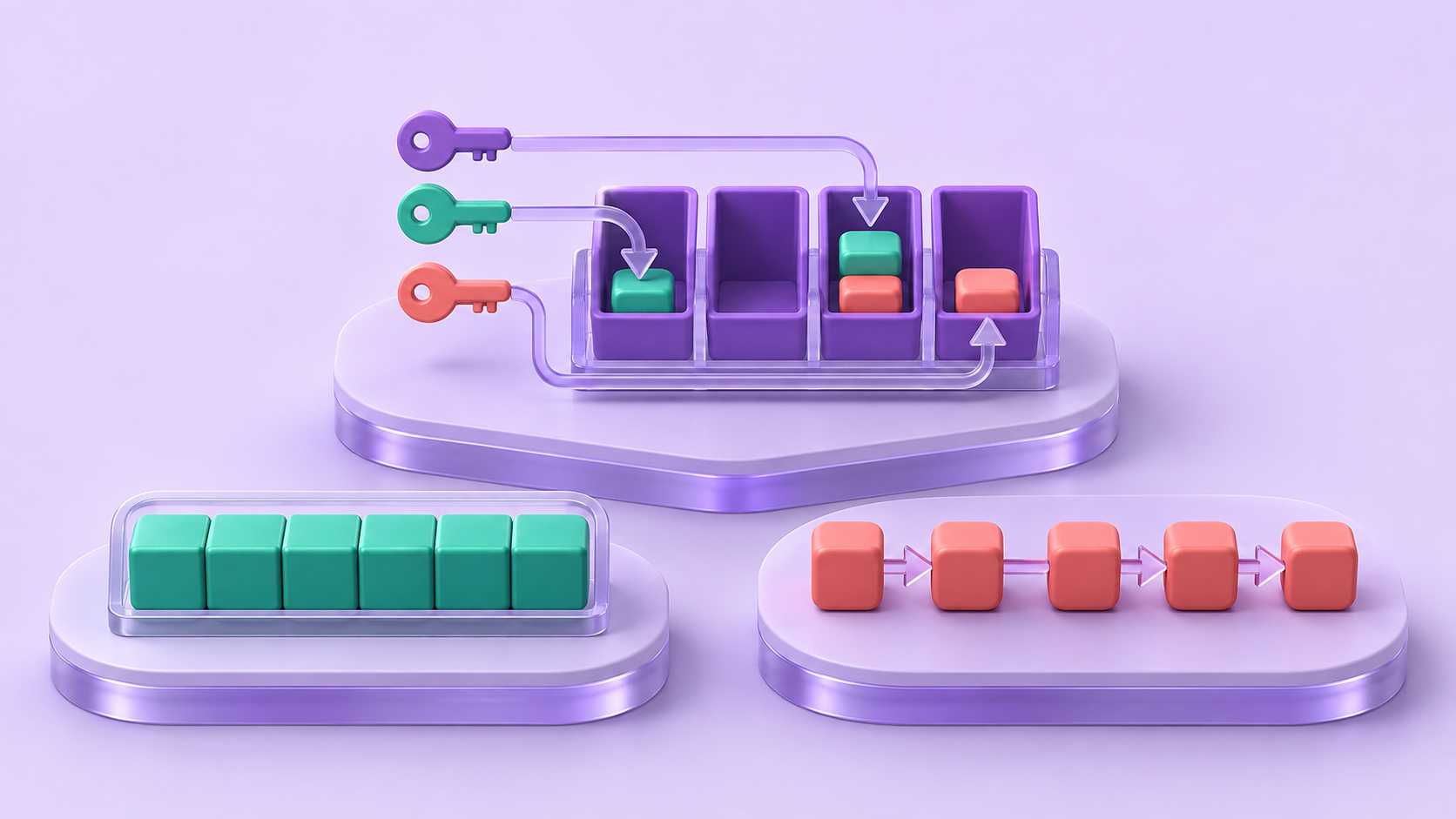
When publishing an event, the producer can specify a Message Key:
Partition Index = MurmurHash2(MessageKey) % TotalPartitions
By setting the message key to the entity ID (e.g., user_id or order_id), all events for that specific entity are guaranteed to route to the exact same partition. Consequently, consumers process updates for any individual entity in strict chronological sequence without race conditions!
C. Consumer Groups and Horizontal Elasticity
Kafka scales consumption through Consumer Groups:
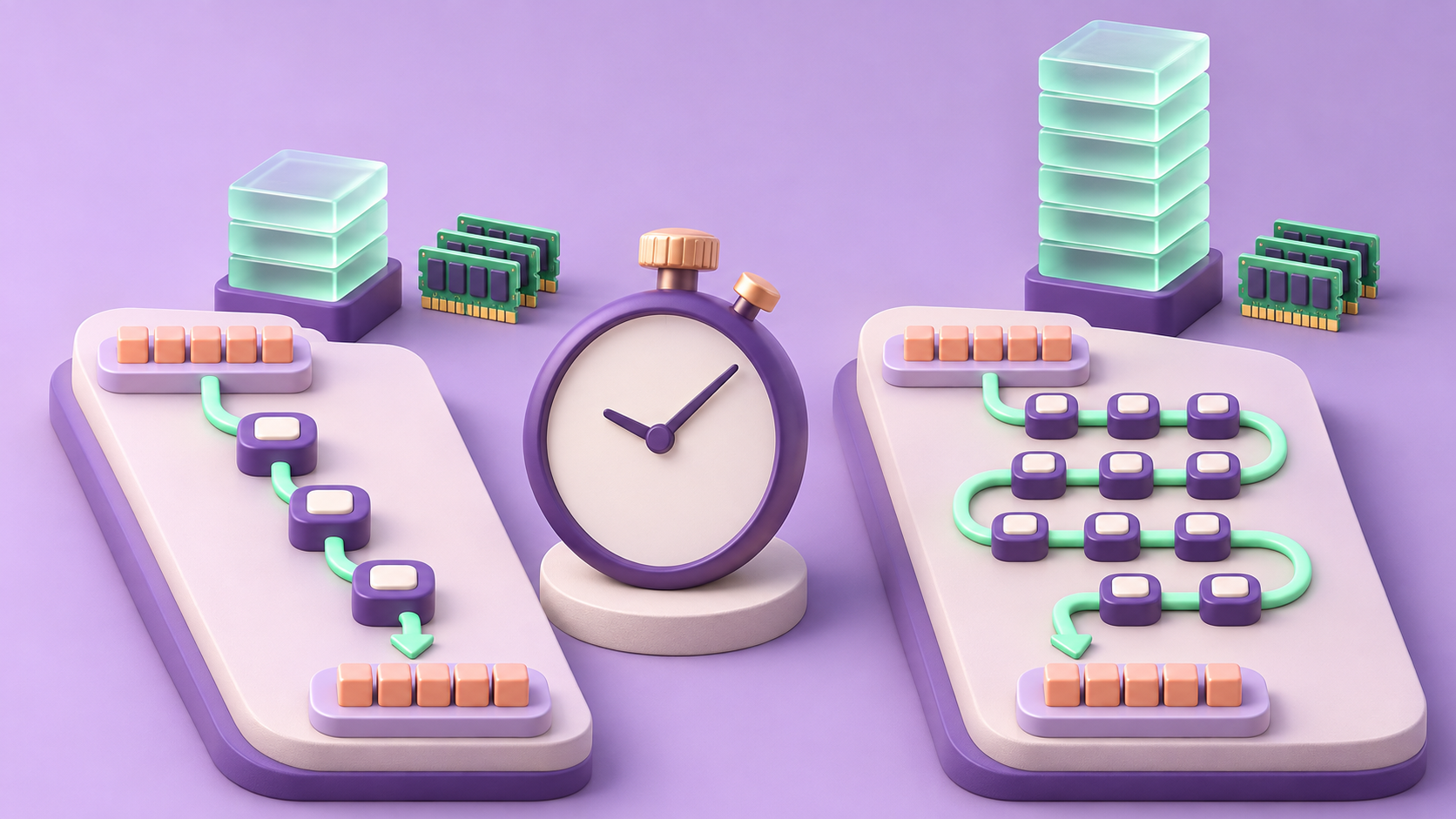
- Each partition in a topic is consumed by exactly one consumer instance within a group at any given time.
- If a topic has 16 partitions, you can run up to 16 consumer instances in parallel, achieving linear horizontal throughput.
- If a consumer crashes, Kafka automatically triggers a Rebalance, reassigning orphan partitions to remaining active instances.
5. Handling Event Schema Evolution with Schema Registry (Avro / Protobuf)
In event-driven systems where events are persisted forever, schemas inevitably evolve as business requirements change. If a producer introduces a breaking field change without coordination, downstream consumers crash.
Production architectures enforce schema contracts using Confluent Schema Registry:
- Producers serialize events using Apache Avro or Protocol Buffers, registering the schema in the central registry.
- Messages on the wire carry a 4-byte Schema ID rather than field metadata, minimizing bandwidth.
- The Schema Registry enforces compatibility rules:
- Backward Compatibility: New consumers can read data written by old producers (e.g. adding optional fields with defaults).
- Forward Compatibility: Old consumers can read data written by new producers.
- Full Compatibility: Both forward and backward compatibility guaranteed.
6. Production Engineering Implementation: Event-Sourced Aggregate in Python
Below is an enterprise-grade Python module demonstrating an event-sourced bank account aggregate with event application, state reconstruction, and snapshot checkpointing:
7. Production Failure Modes: Consumer Lag, Poison Pills, and Dead-Letter Queues (DLQ)
Operating event-driven platforms in high-volume production reveals distinct failure patterns:
- Poison Pill Messages: A malformed message that crashes the consumer deserializer or business logic. Because the consumer crashes before committing its offset, it restarts, reads the same message, and crashes again (infinite crash loop). Solution: Implement a Dead-Letter Queue (DLQ): catch unrecoverable exceptions, publish the malformed message to a DLQ topic for manual inspection, and commit the offset to resume processing.
- Consumer Lag Spikes: When incoming event velocity exceeds consumer processing throughput, consumer lag accumulates. If lag grows unbounded, data freshness SLA degrades. Mitigate by increasing partition counts and scaling consumer worker instances horizontally.
- Out-of-Order Processing across Parallel Consumers: If a consumer attempts to parallelize event processing across multi-threaded worker pools using a shared queue, events for the same aggregate may complete out of order, corrupting state. Always preserve partition affinity when dispatching to internal thread pools.
8. Eventual Consistency and Read-Your-Own-Writes Mitigation
A significant challenge in event-driven systems utilizing CQRS is user-facing eventual consistency. When a user submits an order and is immediately redirected to their profile page, the read model projection might not have processed the newly published Kafka event yet, causing the user to see an outdated order list.
Modern cloud architectures mitigate this discrepancy using three battle-tested strategies:
- Optimistic UI Updates: Client applications update their local frontend cache immediately upon receiving the HTTP 202 Accepted response from the command service, displaying the new entity state before backend projections finalize.
- Read-Your-Own-Writes Session Stickiness: The command service returns the latest aggregate version number (e.g.
v=105) in the response header. When the client subsequently queries the read projection API, the gateway waits until the read model’s consumed Kafka offset reflects at least version 105 before returning the response. - Direct Cache Invalidation: For critical entity lookups, the command service can write directly to a fast in-memory Redis cache with a short TTL, serving immediate reads until the event-driven projection pipeline completes.
9. Frequently Asked Questions (FAQ)
Q: What is the primary difference between Event Sourcing and Traditional CRUD?
Traditional CRUD stores the current state and overwrites historical data via UPDATE queries. Event Sourcing stores the entire sequence of immutable state-changing events in an append-only log, deriving current state by replaying events.
Q: Why does CQRS frequently accompany Event Sourcing?
Event stores are append-only logs indexed by aggregate ID and cannot efficiently execute complex multi-table queries or reporting filters. CQRS separates the read model into denormalized search databases (like Elasticsearch or Postgres) updated asynchronously from the event stream.
Q: How does Kafka guarantee message ordering?
Kafka guarantees strict ordering *within a single partition*. By assigning an entity ID as the message key, all events for that entity hash to the same partition and are consumed in exact sequential order.
Q: What is Eventual Consistency in event-driven systems?
Because read projections are updated asynchronously after an event is committed, there is a brief millisecond delay where read queries may observe slightly older state before converging to consistency.
Q: What is a Dead-Letter Queue (DLQ)?
A DLQ is a dedicated error topic where unprocessable ‘poison pill’ messages are routed after repeated retry failures, preventing the consumer from stalling on bad records.
Q: How do Snapshots optimize Event Sourcing performance?
Snapshots periodically serialize the aggregate state to disk (e.g. every 100 events). When reconstructing an entity, the system loads the latest snapshot and replays only subsequent events, capping rehydration latency to milliseconds.
Q: What happens during a Kafka Consumer Rebalance?
When a consumer node joins or crashes, Kafka halts consumption briefly and reassigns partition ownership across the remaining active instances in the consumer group.
Q: What is the difference between an Event and a Command?
A Command represents an intent to perform an action (can be rejected, named in imperative form: CreateOrder). An Event represents a historical fact that already occurred (immutable, named in past tense: OrderCreated).
Q: Why does Kafka achieve multi-gigabyte throughput on commodity hardware?
Kafka relies on sequential disk append I/O, leverages the operating system page cache, and utilizes zero-copy network transfer (sendfile system call) to stream bytes directly from kernel cache to network sockets.
Q: What is Schema Registry in Kafka architectures?
A central service that stores and validates Avro/Protobuf schemas. It ensures producers and consumers adhere to strict schema evolution rules, preventing breaking changes from crashing services.
Q: How do you handle GDPR ‘Right to be Forgotten’ in an immutable event store?
Because immutable events cannot be deleted, architectures use Cryptographic Erasure: encrypt each user’s personal data using a unique per-user encryption key. When the user requests erasure, destroy their private key, rendering all historical event data permanently unreadable.
Q: What is At-Least-Once vs. Exactly-Once processing in Kafka?
At-least-once delivery guarantees messages are never lost but may be duplicated during retries. Exactly-once processing (Kafka Transactions + Idempotent Producers) ensures that message processing and state commits occur atomically with zero duplication.
10. Architectural Conclusion and Engineering Recommendations
Event-Driven Architecture transforms tightly coupled legacy monoliths into resilient, horizontally scalable distributed systems. When architecting event-driven platforms:
- Adopt Event Sourcing for high-compliance domains (fintech, healthcare, logistics) where auditability and temporal analysis are paramount.
- Implement CQRS to decouple write throughput from complex analytical read queries.
- Design Kafka Partitioning Keys carefully to guarantee strict sequential ordering per entity while distributing load evenly across broker clusters.
- Enforce strict Schema Registry Compatibility to protect downstream consumer ecosystems from breaking contract modifications.