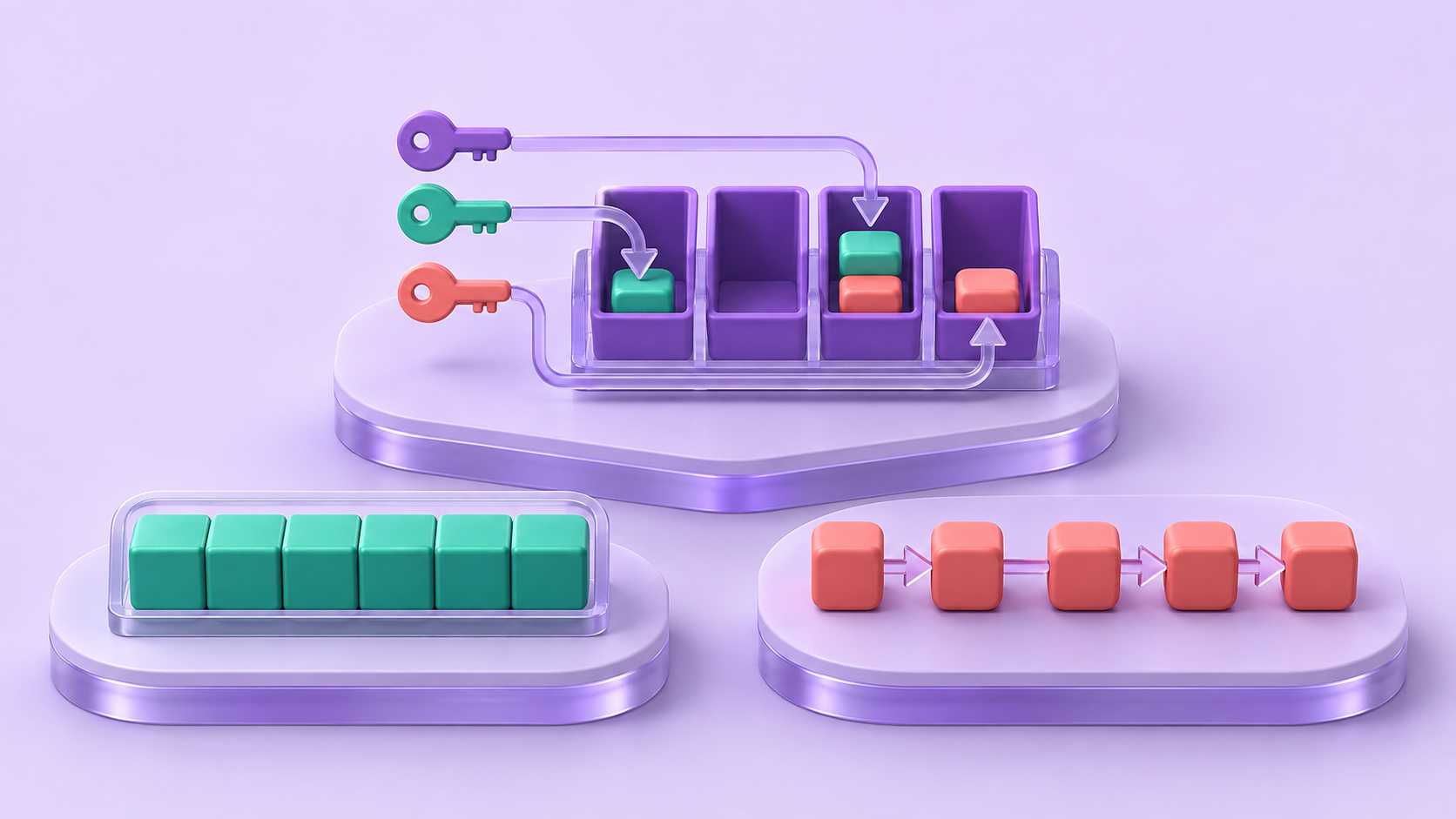
In modern distributed systems engineering, Application Programming Interfaces (APIs) serve as the vital communication arteries connecting web frontends, mobile clients, and hundreds of microservices. Deciding between REST (Representational State Transfer), GraphQL, and gRPC (Google Remote Procedure Calls) is one of the most critical architectural decisions an engineering team faces, directly dictating network payload efficiency, type safety, client developer ergonomics, and microsecond latency bounds.
1. The Evolution of Web Communication: From SOAP to Modern Protocols
The early era of distributed enterprise computing was dominated by SOAP (Simple Object Access Protocol) and XML-RPC. While SOAP offered rigid contract definitions via WSDL (Web Services Description Language), it was burdened by verbose XML serialization, complex WS-* specifications, and high CPU parsing overhead.
Roy Fielding’s 2000 doctoral dissertation formalized REST, introducing an architectural style centered on stateless HTTP primitives, uniform resource URIs, and JSON payloads. Over the subsequent two decades, as smartphone applications proliferated and microservice meshes expanded to hyperscale footprints, the inherent limitations of pure REST prompted Facebook to invent GraphQL in 2015 and Google to open-source gRPC in 2016.
2. REST: Architectural Constraints and The Richardson Maturity Model
REST is an architectural style rather than a strict protocol. Fielding defined six foundational architectural constraints that govern true RESTful systems:
- Client-Server Separation: Decouples user interface concerns from data storage and business logic.
- Statelessness: Each request from client to server must contain all information necessary to understand and process the request. No session context is stored on the server.
- Cacheability: Responses must explicitly declare whether they are cacheable to prevent clients from reusing stale state.
- Layered System: A client cannot tell whether it is connected directly to the end server or an intermediary proxy/CDN.
- Code on Demand (Optional): Servers can extend client functionality by transmitting executable scripts.
- Uniform Interface: Standardized resource identification via URIs, resource manipulation through representations, self-descriptive messages, and HATEOAS.
The Richardson Maturity Model
Leonard Richardson categorized REST implementations across four maturity levels:
- Level 0 (The Swamp of POX): Single URI endpoint using HTTP POST as a raw transport tunnel for all actions (typical of SOAP or RPC).
- Level 1 (Resources): Individual distinct URIs for each resource (e.g.
/orders/123). - Level 2 (HTTP Verbs): Rigorous usage of standard HTTP verbs (GET, POST, PUT, PATCH, DELETE) and status codes (200 OK, 201 Created, 404 Not Found, 409 Conflict).
- Level 3 (Hypermedia Controls / HATEOAS): Responses include hypermedia links instructing the client on possible subsequent state transitions dynamically.
3. GraphQL: Declarative Data Fetching and Schema-Driven Design
GraphQL replaces fixed REST resource endpoints with a single query endpoint (typically /graphql) powered by a strongly-typed schema and declarative query syntax.
Solving Over-Fetching and Under-Fetching
In REST, an endpoint like GET /users/123 returns a fixed JSON payload containing 50 fields, even if a mobile client only needs the user’s name (Over-fetching). Furthermore, to render a user’s dashboard, the client must sequentially call /users/123, /users/123/orders, and /users/123/payments—triggering the notorious N+1 Network Waterfall problem (Under-fetching).
GraphQL empowers the client to request precisely the shape of data required in a single network round-trip:
query GetUserProfile {
user(id: “123”) {
name
orders(limit: 5) {
id
totalAmount
}
}
}
The Backend Challenge: The N+1 Database Query Trap and DataLoader
While GraphQL solves network waterfalls on the frontend, it shifts complexity to the backend server. If a GraphQL resolver iterates over 100 users and fetches their orders individually, it fires 101 separate SQL queries to the database!
Production GraphQL servers resolve this using Facebook’s DataLoader utility. DataLoader batches multiple individual requests within a single tick of the event loop and memoizes database queries, consolidating 100 separate lookups into a single SQL statement: SELECT * FROM orders WHERE user_id IN (...).
4. gRPC and Protocol Buffers: High-Throughput Binary Serialization over HTTP/2
Developed by Google, gRPC is an open-source, high-performance RPC framework designed specifically for low-latency polyglot microservice communication.
Protocol Buffers (Protobuf) vs. Textual JSON
While REST and GraphQL primarily serialize data using human-readable JSON text, gRPC uses Protocol Buffers (Protobuf):
- Compact Binary Encoding: Protobuf strips field names entirely, replacing them with 1-byte integer tags and varint-encoded field numbers. A payload that occupies 1,000 bytes in JSON shrinks to 150-200 bytes in binary Protobuf!
- Fast Serialization / Deserialization: Parsing JSON requires scanning text, validating syntax quotes, and performing string allocations. Protobuf maps directly to native struct memory layouts, deserializing 5x to 10x faster than JSON while consuming minimal CPU cycles.
- Strict Interface Definition Language (IDL): Services and message contracts are strictly defined in
.protofiles, allowing automated code generation across C++, Go, Java, Python, Rust, and TypeScript.
The HTTP/2 Transport Layer Advantage
gRPC mandates HTTP/2 as its underlying transport protocol, delivering critical transport advantages over HTTP/1.1:
- Multiplexing over Single TCP Connection: Hundreds of concurrent RPC calls are multiplexed across a single TCP socket via binary streams, eliminating Head-of-Line (HoL) blocking and TCP handshake overhead.
- HPACK Header Compression: Compresses repeated HTTP headers, reducing network overhead.
- Bidirectional Streaming: Supports four communication paradigms: Unary RPC, Server Streaming, Client Streaming, and Bidirectional Full-Duplex Streaming.
5. Comprehensive Architectural Comparison Matrix
The following matrix evaluates REST, GraphQL, and gRPC across foundational production architecture dimensions:
| Architectural Metric | REST (JSON) | GraphQL | gRPC (Protobuf) |
|---|---|---|---|
| Data Serialization Format | Textual JSON (Human-readable) | Textual JSON (Query + Response) | Binary Protocol Buffers (Compact) |
| Transport Protocol | HTTP/1.1 or HTTP/2 | HTTP/1.1 or HTTP/2 (POST-heavy) | Strictly HTTP/2 (Binary frames) |
| Schema & Type Safety | Optional (OpenAPI / Swagger specs) | Strict (GraphQL SDL Schema) | Strict (Protobuf .proto files with code-gen) |
| Payload Efficiency | Moderate (Includes full JSON key names) | High (Client selects only required fields) | Maximum (Binary encoded varints, zero field names) |
| HTTP-Level Caching | Exceptional (Standard HTTP GET, ETag, Cache-Control via CDN) | Difficult (Most queries use POST; requires persisted queries) | Poor / Custom (Requires application-level RPC caching) |
| Streaming Capabilities | Server-Sent Events (SSE) or WebSockets | GraphQL Subscriptions (via WebSockets) | Native Bidirectional Streaming over HTTP/2 |
| Browser Direct Support | Universal native support (fetch, XHR) | Universal native support (fetch POST) | Requires gRPC-Web proxy (Envoy) for browser clients |
| Primary Production Domain | Public developer APIs, third-party partner integrations | Frontend-to-Backend BFF layers, multi-platform mobile apps | Internal microservice mesh, real-time gaming, low-latency telemetry |
6. Production Engineering Implementation: Protobuf Definition and gRPC Server in Python
Below is an enterprise-grade conceptual implementation demonstrating Protocol Buffer definitions and a concurrent gRPC microservice server implementation:
7. Hybrid Architecture: Backend-for-Frontend (BFF) Pattern
Modern cloud hyperscalers (such as Netflix, Uber, and Airbnb) do not choose between REST, GraphQL, and gRPC in isolation. Instead, they implement a Hybrid Architectural Topology leveraging the Backend-For-Frontend (BFF) pattern:
- Public Ingress & Third Parties (REST): Public developer APIs and partner integrations use REST with OpenAPI 3.0 documentation to maximize adoption and seamless CDN edge caching.
- Client Edge Gateway (GraphQL): Mobile apps (iOS/Android) and Single Page Applications (React/Vue) query a unified GraphQL BFF gateway, aggregating disparate domains into clean, non-waterfall UI payloads.
- Internal Service Mesh (gRPC): Behind the GraphQL gateway, hundreds of internal microservices communicate exclusively via gRPC over HTTP/2. The compact binary Protobuf serialization and high-speed multiplexing ensure sub-millisecond internal hops.
8. Frequently Asked Questions (FAQ)
Q: Why is gRPC difficult to consume directly from web browsers?
Browsers do not expose low-level control over HTTP/2 framing required by standard gRPC (such as arbitrary HTTP/2 trailers). To communicate with web browsers, teams deploy gRPC-Web via an Envoy proxy layer that translates between browser HTTP/1.1 or standard HTTP/2 and internal gRPC.
Q: What is HATEOAS in REST API design?
HATEOAS stands for Hypermedia As The Engine Of Application State. It is the highest level of REST maturity, where API responses contain dynamic hypermedia links that guide clients to valid next actions (e.g. providing payment or cancellation URLs inside an order response).
Q: How does DataLoader prevent the N+1 problem in GraphQL?
DataLoader batches individual database read requests executed within a single tick of the event loop and consolidates them into a single SQL ‘IN (…)’ query, caching results to prevent duplicate lookups.
Q: Why is Protocol Buffer serialization faster than JSON?
JSON is text-based and requires string scanning, quote matching, escaping, and type parsing. Protobuf is binary, using compact integer field tags and pre-calculated byte lengths that can be copied directly into CPU memory structures.
Q: Can GraphQL be cached at the CDN level?
Caching GraphQL at CDN edges is challenging because queries are sent via HTTP POST with dynamic query strings. Solutions include Persisted Queries (saving queries on the server and issuing GET requests with query hash keys) or edge-based GraphQL proxies.
Q: What is the difference between Unary RPC and Bidirectional Streaming in gRPC?
Unary RPC behaves like a standard request-response call: client sends one message and receives one message. Bidirectional streaming allows both client and server to stream messages asynchronously over a single persistent HTTP/2 channel.
Q: When should REST be preferred over gRPC?
REST should be preferred for public APIs intended for third-party developers, simple CRUD applications where HTTP caching via CDNs is essential, and teams where tooling simplicity outweighs microsecond serialization benefits.
Q: How does schema evolution differ between REST and Protobuf?
In Protobuf, fields are numbered. Adding new fields with new numbers is backwards and forwards compatible. Existing clients simply ignore unrecognized tags. REST relies on API versioning (URI paths or headers) to manage breaking schema mutations.
Q: What is over-fetching in API architecture?
Over-fetching occurs when an endpoint returns far more data fields than the consuming client needs, wasting mobile bandwidth, inflating CPU deserialization cycles, and increasing latency on cellular connections.
Q: What is HTTP/2 multiplexing in gRPC?
Multiplexing allows multiple independent RPC requests and responses to be sent simultaneously across a single persistent TCP connection in interleaved binary frames, eliminating connection renegotiation latency.
Q: How does GraphQL handle real-time push events?
GraphQL uses Subscriptions, typically implemented over WebSockets. Clients subscribe to specific event topics, and the server pushes incremental updates matching the client’s subscribed query shape when data changes.
Q: What are gRPC Interceptors?
Interceptors are middleware components in gRPC that intercept incoming and outgoing RPC calls. They are used to implement cross-cutting concerns such as distributed tracing, authentication, logging, and rate limiting.
9. Architectural Conclusion and Engineering Recommendations
Choosing the right API protocol is an architectural decision that must be aligned with client requirements and network topologies:
- Standardize on REST with OpenAPI for public APIs, external developer platforms, and systems requiring seamless edge CDN caching.
- Deploy GraphQL with DataLoader as a Backend-For-Frontend (BFF) tier for mobile and web clients to eliminate over-fetching and eliminate network round trips.
- Mandate gRPC with Protocol Buffers for internal microservice meshes to guarantee type safety, maximize serialization throughput, and minimize inter-service latency.
- Embrace a Polyglot Hybrid Architecture to combine the strengths of each protocol across your system boundary.